Warning: Attempt to read property "base" on null in /home/scubadivingearth/old.scubadivingearth.com/wp-content/plugins/pdb-image-expansion/pdbiex/Media_Library.php on line 49
Learn to Scuba Dive | Page 11 of 15 | Scuba Diving Earth

Scuba Diving Earth

Scuba Diving Blog & Forum

Learn to Scuba Dive

BSAC vs NAUI (Which diving certification is better BSAC or NAUI?)

Both scuba diving qualifications from BSAC and NAUI are recognised internationally. The beginner scuba diving certification that BSAC teach is “Ocean Diver” where the maximum depth is 20 metres (67 feet). Whereas NAUI teaches “Scuba Diver” as their first course where the maximum depth is 18 metres (60 feet). The course that BSAC teaches tends to be slighter cheaper and take longer than NAUI. Many argue that BSAC training is more thorough too.
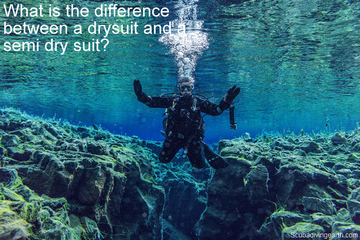
What is the difference between a drysuit and a semi dry suit?

The difference between a drysuit and a semi dry suit is that a dry suit keeps you dry and in a semi drysuit you get wet. There are other differences, which include that drysuits are designed to be used in colder waters than semi drysuits. Also, drysuits tend to be more expensive than semidry’s and a drysuit can be used for buoyancy control instead of your buoyancy control device (BCD). Whereas a semi drysuit cannot be used like a BCD.

How Long Should You Wait To Fly After Scuba Diving? (What’s SAFE?)

How long do you have to wait to go scuba diving after flying depends on which rules you follow. This should be a minimum of 12 hours for a single dive, but ideally 24 hours. For repetitive dives, or multiple days of diving a minimum preflight surface interval of at least 18 hours is recommended. Divers Alert Network (DAN) recommends 24 hours after repetitive dives, whereas the US Air Force recommends 24 hours after any dive. But then the US Navy tables only recommend 2 hours before flying to altitude.

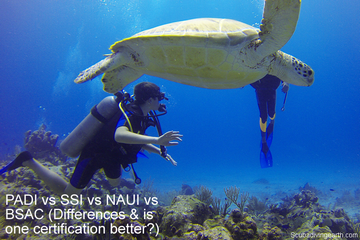
PADI vs SSI vs NAUI vs BSAC (Differences & is one certification better?)

PADI vs SSI vs NAUI vs BSAC what are the differences. There are a number of differences between the scuba diving agencies. Starting with PADI, they would be considered as a ‘training agency’ trading for a profit. Compared to BSAC at the other end of the scale would consider itself to be more of a ‘club’, and is a non-profit organisation. SSI is similar to PADI, as it’s also a profit making dive organisation, whereas NAUI is similar to BSAC, as it is also a not for profit scuba diving organisation.

BSAC vs SSI (Which diving certification is better BSAC or SSI?)

Both scuba diving qualifications from BSAC and SSI are recognised internationally. The beginner scuba diving certification that BSAC teach is “Ocean Diver” where the maximum depth is 20 metres (67 feet). Whereas SSI teaches “Open Water Diver” as their first course where the maximum depth is 18 metres (60 feet). The course that BSAC teaches tends to be slighter cheaper and take longer than SSI. Many argue that BSAC training is more thorough too.
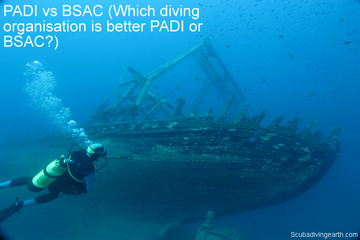
PADI vs BSAC (Which diving qualification is better PADI or BSAC?)

Both scuba diving qualifications from BSAC and PADI are recognised internationally. The course that BSAC tech tend to be slighter cheaper and take longer than PADI’s. Many argue that BSAC training is more thorough too. But for a faster way to get qualified and for the number of places to do so, PADI would be the choice. The beginner scuba diving certification that PADI teaches is “Open Water Diver” where the maximum depth is 18 metres (60 feet). Versus BSAC which is “Ocean Diver” where the maximum depth is 20 metres (67 feet).
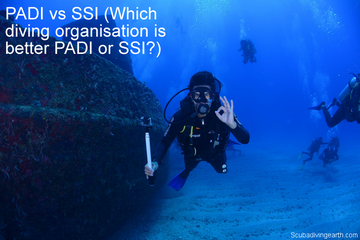
PADI vs SSI (Which diving certification is better PADI or SSI?)

The beginner scuba diving certification that PADI teaches vs the training with SSI is very similar. For both organisations the beginner certification is known as “Open Water Diver”. This starter certification qualifies you to dive to 18 metres (60 feet) with both PADI and SSI. But SSI also offer a “Scuba Diver” level which is for divers who can only dive under the supervision of a dive professional and to a maximum of 12 metres (40 feet).

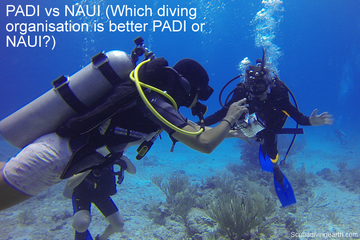
PADI vs NAUI (Which diving certification is better PADI or NAUI?)

PADI vs NAUI and which diving organisation is better. Both PADI and NAUI their first certification level allows youto dive to a depth of 18 metres (60 feet). The main difference between these two beginner certifications is that NAUI trains its divers some basic skills of saving an unconscious diver, whereas PADI doesn’t.

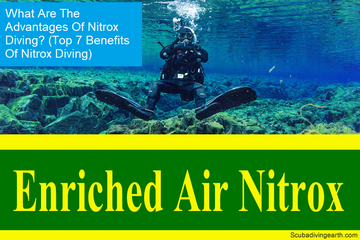
What Are The Advantages Of Nitrox Diving? (Top 7 Benefits Of Nitrox Diving)

What are the advantages of nitrox diving? An extended bottom time E.g. 24 metre (80 feet) dive bottom time doubles from 30 to 60 minutes with 36% Nitrox mix

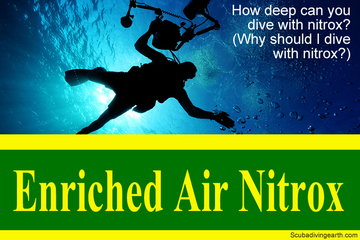
How Deep Can You Dive With Nitrox? (Why Should I Dive With Nitrox?)

How deep can you dive with nitrox depends on the oxygen percentage. For example 32% nitrox: max depth 33 metres (110 feet) & 36% nitrox: 28 metres (90 feet).Why you should dive with nitrox is because it extends your dive time, which in some cases is nearly double that of atmospheric air at the maximum dive depths for nitrox.

Scuba Diving Questions And Answers (Scuba Diving Facts And Trivia)

Scuba diving questions and answers that are commonly asked by non-divers and beginner scuba divers. These include questions like: is it hard to learn to scuba dive; can a non-swimmer go scuba diving; can you scuba dive without being certified; howto get certified…and more.

Scroll to top