Warning: Attempt to read property "base" on null in /home/scubadivingearth/old.scubadivingearth.com/wp-content/plugins/pdb-image-expansion/pdbiex/Media_Library.php on line 49
Learn to Scuba Dive | Page 13 of 15 | Scuba Diving Earth

Scuba Diving Earth

Scuba Diving Blog & Forum

Learn to Scuba Dive

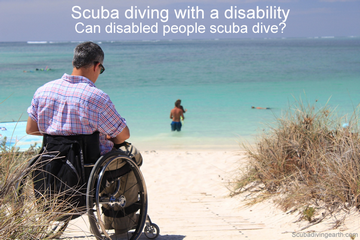
Scuba Diving With Disabilities (Can You Scuba Dive If You’re Disabled?)

Scuba diving with a disability has been transformed by Sue Austin with the world’s first self-propelled underwater wheelchair. Whilst there may be additional considerations for diving for the disabled, this doesn’t mean scuba diving can’t be done. Because it can – see video below. There are organisations and charities to help. The main diving organisations have courses to learn how to dive with people with disabilities too.
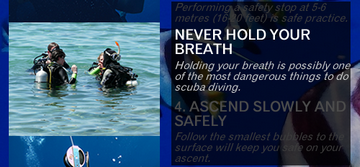
10 Top Safety Tips For Scuba Diving (Making Scuba Safe)

The top 10 safety tips for scuba diving include: 1. Never hold your breath. 2. Never dive alone. 3. Ascend slowly from every dive. 4. Perform a safety stop at 5-6 metres (16-20 feet) on every dive. 5. Plan your dive and dive the plan. 6. Know your limits and dive within your limitations. 7. Check your air contents gauge regularly. 8. Always dive with an alternative air source or octopus. 9. Always perform the ABC buddy check before your dive. 10. Only dive if you’re fit to dive.

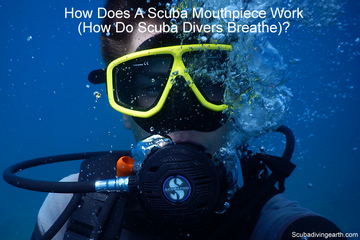
How Does A Scuba Mouthpiece Work (How Do Scuba Divers Breathe)?

A scuba mouth piece works by reducing the air pressure in your dive tank from around 200 bar (2,900 psi) down to ambient pressure. Ambient pressure is the pressure of the water that surrounds you on a dive. The 1st stage vs. 2nd stage of your regulator is where the magic happens. The first stage reduces the pressure to around 8-11 bar (116-160 psi) or intermediate pressure. The second stage is where the intermediate pressure is reduced down to ambient pressure, where it’s safe to breathe.

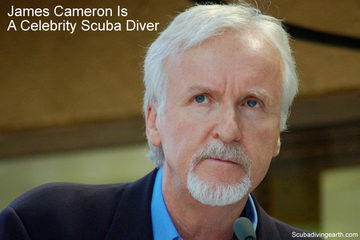
James Cameron Scuba Diving (Celebrity Scuba Divers)

James Cameron scuba diving celebrity and film director. Holding the accolade to have two of the four films that grossed over $2 billion. But he’s also been to the deepest part of planet earth, the Challenger Deep. Which gave Cameron the title for being the first person to successfully solo dive to the deepest part of the Mariana Trench.

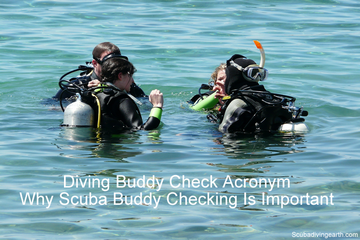
Diving Buddy Check Acronym or Mnemonic (Why Scuba Buddy Checking Is Important)

Many divers use a diving buddy check acronym or mnemonic to remember how to carry out a scuba dive buddy check. Acronyms or mnemonics include the ‘ABC’ BSAC buddy check and the ‘BWRAF’ PADI dive check. A scuba dive buddy check is for your safety and your buddy’s safety. The buddy checking makes sure your kit and your buddy’s kit is in working order. It helps to familiarise you both with each others scuba kit and confirms your air is switch on.

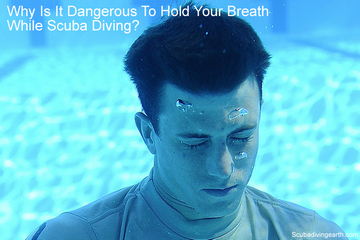
Why Is It Dangerous To Hold Your Breath While Scuba Diving?

It’s dangerous to hold your breath while scuba diving because if you do you risk a lung over expansion. A lung over expansion can lead to a pneumothorax (collapsed lung) or an arterial gas embolism (which can lead to a stroke). You’ll learn in your diver training the most important rule in scuba diving is to not hold your breath. You’ll learn about Boyle’s law, where the air in a diver’s lungs expands during ascent and contracts during descent. Breath holding underwater can result in one of the above two serious injuries and even death.

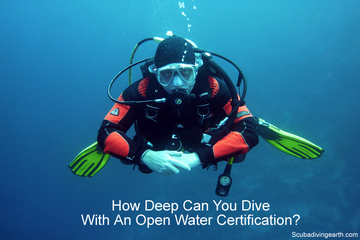
How Deep Can You Dive With An Open Water Certification?

The depth you can you dive with an open water certification with diving organisations like PADI and SSI is 18 metres (60 feet). But there are other diving organisations that also call their first certification level ‘open water diver.’ Some use the 18 metres depth level, whereas others use 20 metres (66 feet) as their safe depth for newly certified scuba divers. BSAC call their first certification level Ocean Diver, where the depth limit is set at 20 metres.

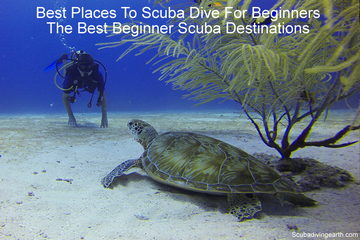
Best Places To Scuba Dive For Beginners (10 Best Beginner Scuba Destinations)

The best place to scuba dive for beginners include Bonaire, The Great Barrier Reef, the Red Sea, the Maldives, Barbados, Antigua, Cayman Islands, the Bahamas, the Florida Keys and Koh Tao. A dive site for a beginner scuba diver should satisfy the follow characteristics: The depth should be shallower than 20 metres (66 feet); There shouldn’t be an underwater current so it’s not a drift dive; The dive should ideally not be a wall dive where good buoyancy control is a key requirement; The dive must have a key interest, be it a shallow wreck, an interesting reef etc.

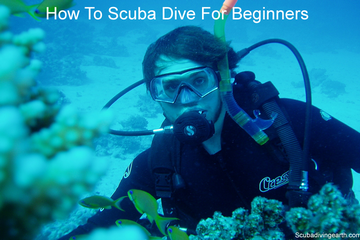
How To Scuba Dive For Beginners (7 Skills To Master As A Beginner Diver)

How to scuba dive for beginners is all about learning to scuba dive safely. Included in this article are 7 top skills to learn as a beginner scuba diver. These are: Skill #1: Never hold your breath; Skill #2: Equalise your ears early and often; Skill #3: Learn buoyancy control and to become neutrally buoyant; Skill #4: Learn to clear your mask; Skill #5: Learn to clear your regulator; Skill # 6: Release air from your BCD on your ascent; Skill #7: Always perform a safety stop at 5-6 metres (16-20 feet).

How Deep Can You Dive Without Decompression (No Decompression Stop Limits)

Many beginner scuba divers ask ‘how deep can you dive without decompression.’ As all dives are decompression dives, the answer is: You can’t dive without needing to decompress. A better question that should be asked is ‘how deep can you dive without decompression stops?‘ Decompression stops are affected by how deep you dive and also by how much time you spend at your chosen depth. The deeper and longer your dive, the more chances of needing decompression stops. For shallow dives between 6-10 metres (20-30 feet) you could spend many hours without needing to stop for decompression. But if you dive deeper than 30 metres (100 feet), your time at this depth would be limited to around 20 minutes before a decompression stop is required.

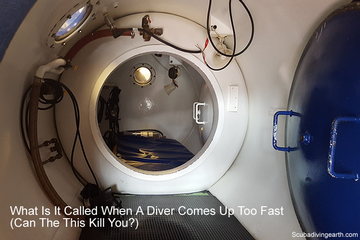
What Is It Called When A Diver Comes Up Too Fast (+17 Tips How To Avoid DCS)

When a scuba diver comes up too fast and has either mild or severe symptoms as a result, this is called decompression sickness. The other name for this is ‘The Bends.’ In the most severe cases of a scuba diver coming up too fast from a dive and getting the bends, the diver can die. The symptoms of decompression sickness vary, but are caused from the formation of nitrogen bubbles inside the body due to the reduced pressure on ascent.

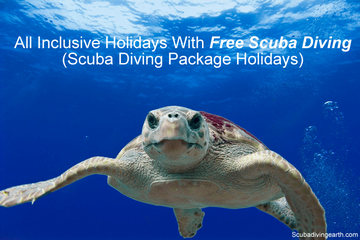
All Inclusive Holidays With Free Scuba Diving (Scuba Diving Package Holidays)

All inclusive holidays with free scuba diving. Resort holidays in the Caribbean where you can dive as much as you like every day and it’s all included in the price of the holiday. Book an all-inclusive holiday with Sandals and enjoy a relaxing vacation in the sun with a difference. Just add a scuba diving certification and you’re good to go. But even if you’re not a certified scuba diver, you can learn to dive with an experienced PADI diving instructor. But you will need to pay additional course fees. There’s even a 3-hour Discover Scuba Diving Program, which also carries a nominal fee.

Scroll to top