Warning: Attempt to read property "base" on null in /home/scubadivingearth/old.scubadivingearth.com/wp-content/plugins/pdb-image-expansion/pdbiex/Media_Library.php on line 49
Learn to Scuba Dive | Page 14 of 15 | Scuba Diving Earth

Scuba Diving Earth

Scuba Diving Blog & Forum

Learn to Scuba Dive

Why Am I So Hungry After Scuba Diving? (What’s Going On?)

The question of ‘why am I so hungry after scuba diving,’ is down to two things. The first of which is probably down to dehydration. The brain can get confused and feel hungry when it’s mildly dehydrate. When in fact it needs more water instead. The second reason is that although scuba diving is a low impact sport, you still burn around 600 calories per hour. This is due to the extra heat loss underwater, due to water conducting heat 25 times more efficiently than air.
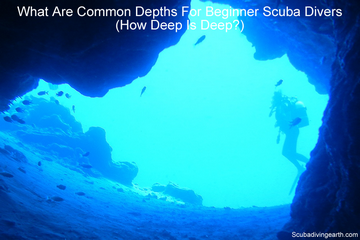

What Are Common Depths For Beginner Scuba Divers (How Deep Is Deep?)

The common depths of beginner scuba divers is somewhere between 18-20 metres (59-66 feet). This limit is set due to the pressure of water at depth and the implications deep water has on scuba divers. Why this is important is due to oxygen toxicity; Boyle’s Law and how the changing pressures at depth impacts gas volumes; decompression sickness or the bends; and nitrogen narcosis. At the next stage of learning to scuba dive, the most common depths are between 18 and 35 metres (59-115 feet).

Top 10 Dive Sites In The World By Jacques Cousteau

Top ten dive sites in the world by Jacques Cousteau include the following bucket list dive sites: The Great Blue Hole, Belize; Cozumel, Mexico;  Sipadan, Borneo of Malaysia; Poor Knights Islands, New Zealand; Heron Island, Australia; Aliwal Shoal, South Africa; Richelieu Rock, Thailand; Sha’b Rumi in the Read Sea, Sudan; Vancouver Island, Canada; and The Cocos Islands, Costa Rica.

Is It Illegal To Dive Without Certification? (Is It Legal To Dive Alone?)

It’s not illegal to dive without certification. But it is dangerous to dive without certification. Also, you’ll not be able to dive with any reputable dive centre or dive club without first getting certified to scuba dive. If you want to scuba dive, then do it the right and safe way and get trained. You have a choice of a few scuba diving schools, where there are three top schools around the world: PADI, SSI and BSAC.

How To Overcome Panic When Scuba Diving (Tips To Prevent Panic Attacks)

Having suffered from a panic attack when scuba diving myself, I know how important the question about how to overcome panic when scuba diving is. Firstly, let your dive buddy know there’s something wrong. If the panic is caused by Nitrogen Narcosis, try ascending a few feet or a metre or so. Control your breathing, as this may stop the attack, but will help to conserve your air supply too. Mind distraction helps, really focus on what’s around you on the dive, get interested in what you can see. Ask yourself why you love scuba diving and focus on this aspect.

Scuba Diving Claustrophobia (12 Tips on How To Overcome Scuba Diving Anxiety)

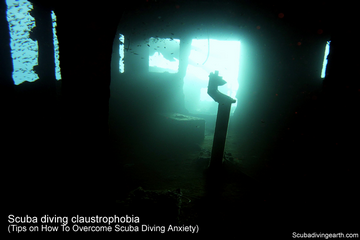
You shouldn’t be scuba diving if you suffer from severe claustrophobic reactions. However, if your response to confined spaces is a mild anxiety then you should be okay to scuba dive. However, be mindful of what causes your claustrophobia and avoid situations that may cause you to react. For example, you should probably avoid swimming into swim-throughs, caves and I wouldn’t suggest you penetrate wrecks either. However, if these are things you’d like to try out, take steps to treat your claustrophobia first.

What Is Night Diving (21 Night Diving Tips)

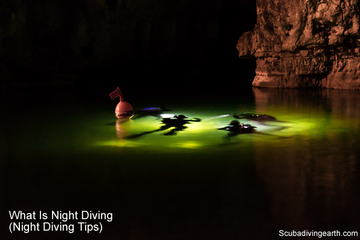
Night diving is scuba diving either at night or at dusk where your underwater world experience changes. It changes from an environment that’s lit up by the sun, to one that’s illuminated by your divers torch. The creatures that usually go about their daily business on the reefs and wrecks during daylight hours are hiding and asleep. You then discover the wildlife that ventures out at night instead. You only see the small field of vision illuminated by your divers light, which is a whole new experience and an exhilarating one too.

What Is Deep Diving For Scuba Divers? (26 Tips For Deep Scuba Diving)

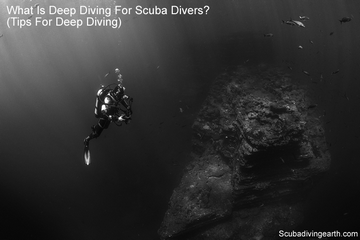
Deep diving is underwater diving to depths beyond first stage diver training. For PADI and NAUI this means deeper than 18 metres (60 feet) and BSAC deeper than 20 metres (66 feet). But in practice deep diving is beyond 30 metres (98 feet) when divers can experience nitrogen narcosis.

What is Drift Diving? (20 Pro Tips For Drift Diving Beginners)

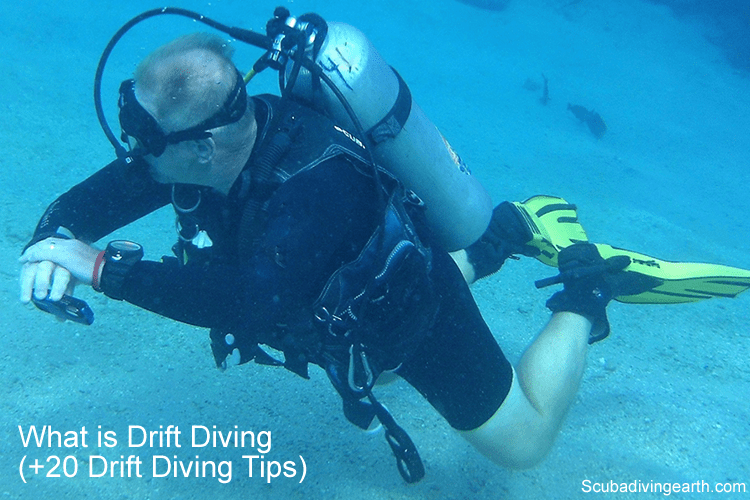
A drift dive is a scuba dive in waters where there’s a tide or current flowing. This current will be strong enough to push you along in the water. The fun lies in going with the flow! If you’re diving in a current of half a knot or more, then I’d class this as a drift dive. But a dive where there’s a ‘drift’ may not always be about the drift itself. You may be scuba diving to see sharks that happen to be there because of the strong current. In which case you may not want to be drifting in the current.

What Are The Different Types Of Scuba Diving? (What’s Best For You?)

The types of scuba diving and what diving you can do depends on your scuba diver qualification level and experience. The types of scuba diving available to you begin with open water diving. Then you can extend this to exciting drift diving and go with the flow of the current. Enter the dark waters of the deep on a night dive and experience a whole new set of flora and fauna that wakes up in the night. Then gain more experience and qualify further to dive even deeper to explore fascinating wrecks and sea life including the infamous sharks that patrol the depths.

Scroll to top