Warning: Attempt to read property "base" on null in /home/scubadivingearth/old.scubadivingearth.com/wp-content/plugins/pdb-image-expansion/pdbiex/Media_Library.php on line 49
Scuba Diving Tips & Safety | Page 17 of 19 | Scuba Diving Earth

Scuba Diving Earth

Scuba Diving Blog & Forum

Scuba Diving Tips & Safety

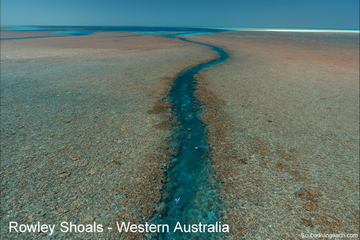
Rowley Shoals Liveaboard Diving (How To Get To Rowley Shoals To Scuba Dive?)

Visit the Rowley Shoals by liveaboard. Offering some of the best diving in Australia or possibly the world. The reefs are among the most remote and pristine marine areas in the world. Due to their remoteness and abundance of sea-life, plus some of the best visibility available, some argue the diving there trumps The Great Barrier Reef. The only way to snorkel and dive the Rowley Shoals is by liveaboard, as they are some 300 kilometres (188 miles) off the coast from Broome in Western Australia. Also, the diving there is a very limited season from September to December.
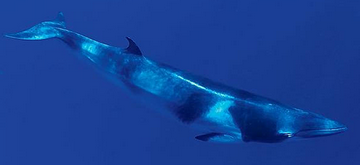
Dwarf Minke Whale Liveaboard Spoilsport and Spirit of Freedom: Great Barrier Reef Dwarf Minke Whales

One of the best opportunities to see Dwarf Minke Whales is on a liveaboard in Queensland Australia. Fly to Cairns on the north east coast of Queensland. Then join a liveaboard to swim, snorkel and dive the Great Barrier Reef. The Great Barrier Reef is in itself an amazing place. But if you visit between June and September, you may also be privileged to see and swim with Dwarf Minke Whales too.

Can You Scuba Dive If You Are Pregnant? (Will My Baby Be At Risk?)

This may come as a surprise to you that the answer of no diving during pregnancy isn’t based upon sound medical research, but it’s the right answer. Your developing fetus isn’t protected from nitrogen bubbles. This means there’s a chance of a theoretical risk for injury Whilst the evidence for this is not fully scientifically proven, the information that is available suggests there are potential risks. The risks from a pregnant mother scuba diving to the unborn baby aren’t worth taking. These risks include possible complications caused by decompression on the ascent from a dive.

How To Overcome Panic When Scuba Diving (Tips To Prevent Panic Attacks)

Having suffered from a panic attack when scuba diving myself, I know how important the question about how to overcome panic when scuba diving is. Firstly, let your dive buddy know there’s something wrong. If the panic is caused by Nitrogen Narcosis, try ascending a few feet or a metre or so. Control your breathing, as this may stop the attack, but will help to conserve your air supply too. Mind distraction helps, really focus on what’s around you on the dive, get interested in what you can see. Ask yourself why you love scuba diving and focus on this aspect.

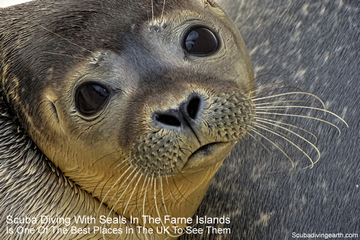
Farne Islands Diving With Seals (Best UK Place To Scuba Dive With Seals)

Farne Islands diving is some of the best Scuba Diving in the UK there is. If you love to see wildlife, and in particular seals, then you’re in for a treat. The best time to to dive in the Farne Islands is late September to early October, when the adolescent seals are around and the water temperature is between 14-15C (57-59F). At this time they are very inquisitive and will engage with scuba divers. The best tip for them to come close, is to set your buoyancy and float on your back. Doing this makes you appear less threatening and they will come right up to you and even bite at your fins.

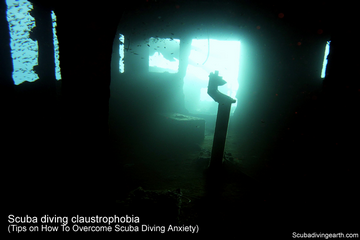
Scuba Diving Claustrophobia (12 Tips on How To Overcome Scuba Diving Anxiety)

You shouldn’t be scuba diving if you suffer from severe claustrophobic reactions. However, if your response to confined spaces is a mild anxiety then you should be okay to scuba dive. However, be mindful of what causes your claustrophobia and avoid situations that may cause you to react. For example, you should probably avoid swimming into swim-throughs, caves and I wouldn’t suggest you penetrate wrecks either. However, if these are things you’d like to try out, take steps to treat your claustrophobia first.

Scuba Diving Amongst The Wrecks In Scapa Flow (Best Wreck Diving UK)

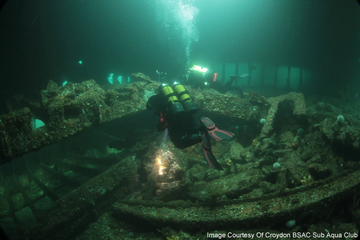
Scapa Flow is in the Orkney Islands in Scotland at the most northern tip of the UK. There are eight main ship wrecks to dive that remain from the scuttled German fleet. The dive depths range from about 12 metres (40 feet) to about 45 metres (150 feet). The waters are the warmest in September where they rise to 14C (57F), but go down to 4C (39F) in April. Visibility can be as good as 30 metres (100 feet), but also drop to around 10 metres (33 feet). Which in UK terms is very good visibility. Dive boats are boarded at a place called Stromness on Orkney mainland.

What Is The Best Time To Visit The Great Barrier Reef? (For The Best Diving)

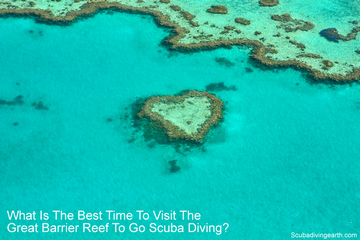
You can dive year-round on the Great Barrier Reef. Although the best conditions for scuba diving are from June through October. For liveaboard diving, the best time to go is July through November. In the Coral Sea, the visibility is best in June and in September.

What Is Night Diving (21 Night Diving Tips)

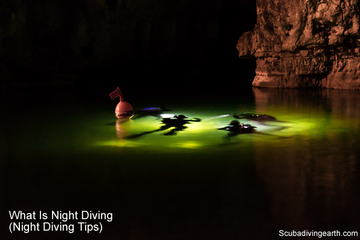
Night diving is scuba diving either at night or at dusk where your underwater world experience changes. It changes from an environment that’s lit up by the sun, to one that’s illuminated by your divers torch. The creatures that usually go about their daily business on the reefs and wrecks during daylight hours are hiding and asleep. You then discover the wildlife that ventures out at night instead. You only see the small field of vision illuminated by your divers light, which is a whole new experience and an exhilarating one too.

Titan Triggerfish Breeding Season (Scuba Diving Story In The Red Sea)

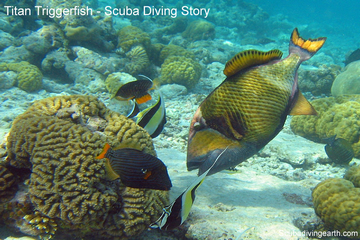
This is a short scuba diving story when my dive buddy and I were scuba diving along Triggerfish Alley in the Red Sea. This particularly aggressive Titan Triggerfish took an immediately dislike to my dive buddy. I turned to see her kicking her fins vigorously which was unlike her. Then I saw the reason, she had a Titan Triggerfish snapping at her heals like a Jack Russell Dog. I swam to her rescue like a ‘diver in shining armour’ and all ended well. We swam away from this Triggerfish and she didn’t get bitten.

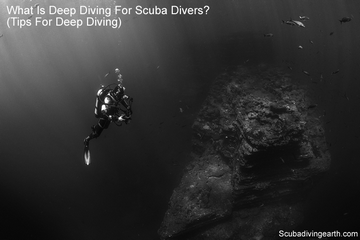
What Is Deep Diving For Scuba Divers? (26 Tips For Deep Scuba Diving)

Deep diving is underwater diving to depths beyond first stage diver training. For PADI and NAUI this means deeper than 18 metres (60 feet) and BSAC deeper than 20 metres (66 feet). But in practice deep diving is beyond 30 metres (98 feet) when divers can experience nitrogen narcosis.

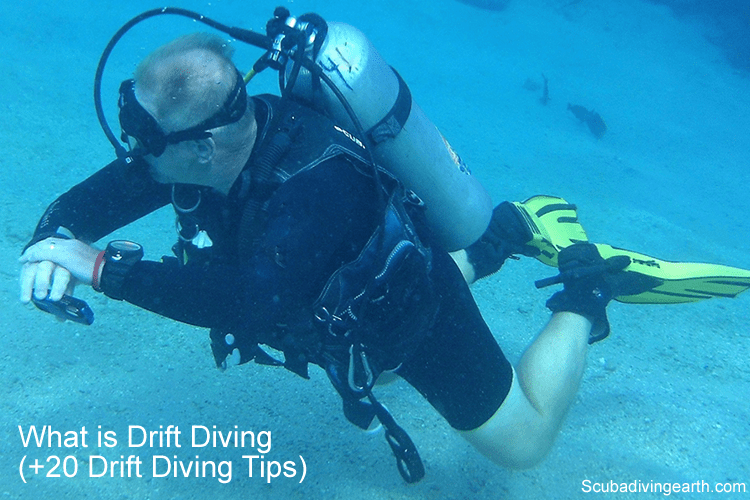
What is Drift Diving? (20 Pro Tips For Drift Diving Beginners)

A drift dive is a scuba dive in waters where there’s a tide or current flowing. This current will be strong enough to push you along in the water. The fun lies in going with the flow! If you’re diving in a current of half a knot or more, then I’d class this as a drift dive. But a dive where there’s a ‘drift’ may not always be about the drift itself. You may be scuba diving to see sharks that happen to be there because of the strong current. In which case you may not want to be drifting in the current.

Scroll to top