Warning: Attempt to read property "base" on null in /home/scubadivingearth/old.scubadivingearth.com/wp-content/plugins/pdb-image-expansion/pdbiex/Media_Library.php on line 49
Scuba Diving Tips & Safety | Page 18 of 19 | Scuba Diving Earth

Scuba Diving Earth

Scuba Diving Blog & Forum

Scuba Diving Tips & Safety

What Are The Different Types Of Scuba Diving? (What’s Best For You?)

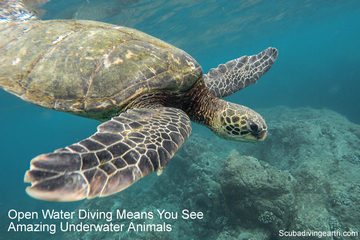
The types of scuba diving and what diving you can do depends on your scuba diver qualification level and experience. The types of scuba diving available to you begin with open water diving. Then you can extend this to exciting drift diving and go with the flow of the current. Enter the dark waters of the deep on a night dive and experience a whole new set of flora and fauna that wakes up in the night. Then gain more experience and qualify further to dive even deeper to explore fascinating wrecks and sea life including the infamous sharks that patrol the depths.
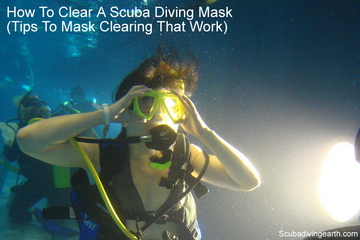
How to Clear a Scuba Diving Mask Like a Pro (4 Steps to Clear a Mask)

The four simple steps of how to clear a scuba diving mask underwater are as follows: 1. Take a breathe in from your regulator; 2. Tilt your head backwards; 3. Press your index finger on the top of the mask (Note: it’s important to master this skill using just one hand); 4. Blow out through your nose and into the mask to force the water out from the bottom of the mask’s skirt.

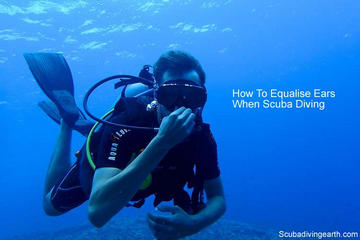
How To Equalize Ears When Scuba Diving Like A Pro (+20 Tips To Help)

The best way to equalise your ears when scuba diving is to swallow hard, which should open your eustachian tubes and equalise the air space. But if you can’t equalise your ears naturally pinch your nostrils on the outside of your mask and gently exhale, which is called the Valsalva Manoeuvre.

Scuba Diving Equipment Essentials (What Do You Need To Start Diving?)

The essential scuba diving equipment you need to start diving includes the following: diver’s watch; mask, snorkel and fins; and exposure suit or body insulation like a wetsuit or dry suit; a set of scuba diving regulators; a buoyancy control device or BCD; a dive computer (but this can be a combined diver’s watch-come dive computer). For diving  in your own country near to wear you live, you need to also add a weight system and air tanks or diving cylinders too. There’s then other scuba gear to add to your kit as you progress or if you have the money at the outset.

How Does Scuba Diving Burn Calories (Is Scuba Diving A Good Work Out?)

Scuba diving burns calories mainly due to heat loss as water dissipates heat from your body 25 times faster than air due to its greater thermal conductivity. Scuba diving also burns calories from low impact exercise in a weightless environment. The combination of both is up to 600 calories per hour.

How To Prevent Mask Squeeze (Advice To Avoid An Eye Barotrauma)

Mask squeeze is easy to prevent by the simple action of breathing out from your nose. This action equalizes the airspace in the mask as the pressures builds up on descent. The time when mask squeeze is most likely to happen is during the first 10 metres (33 feet) of descent. It’s a simple matter of remembering to blow out of your nose in between each nose squeeze to clear your ears on the way down.

107 Pro Tips For Beginner Scuba Divers (Must Know Techniques)

If there’s one lasting point to take away from this post about scuba diving tips for beginners, that’s to have fun and enjoy scuba diving, but to do it safely and within your own limitations. The scuba diving tips included are not only for beginners, as you can always learn more. The tips included also relate to scuba diving equipment tips; tips for diving from dive boats; buoyancy control tips; diver descent tips; underwater navigation tips; scuba travel tips; diving with wildlife tips; air conservation tips; dive time extension tips; safe scuba diving tips; dive buddy tips; plus health and fitness tips for scuba divers.

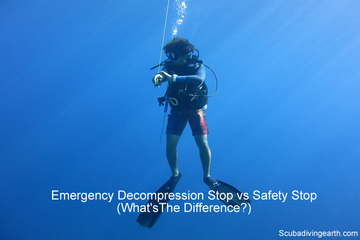
Emergency Decompression Stop vs Safety Stop (What’s The Difference?)

If you follow safe diving practices (which I recommend you do) you will perform a safety stop on every scuba dive you do. Additionally, you will dive within recreational dive depth limits according to your scuba diver certification level and diver experience. This means that you’ll only dive within safe no stop time limits, but where these are exceeded by accident, you’ll carry out emergency decompression stops, in addition to a safety stop at 5-6 metres (16-20 feet) for a minimum of 3 minutes.

Scuba diving tips for non swimmers (Do not dive before you read this)

If you’re looking for scuba diving tips as a non swimmer is; learn to swim first. Don’t even consider scuba diving before you learn how to swim. It’s unsafe to do that. You have to be able to swim 200 metres (656 feet) in a swimming pool to learn to dive. Swimming isn’t difficult to learn and is fun once you know how. You may also wish to consider snorkeling as a first step to learning to scuba dive too.

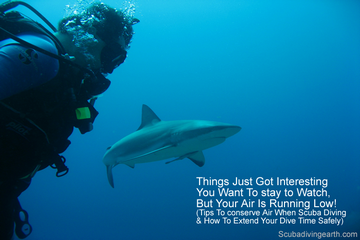
22 Top Pro Tips To Conserve Air While Scuba Diving (+5 Dive Extend Tips)

Learning how to conserve air while scuba diving is one of the most important techniques to master. Mastering this will make your air last longer and will extend your dive time. The list of air saving tips I’ve created also includes tips to extend your dive time too.

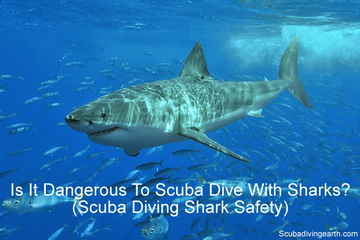
Is It Dangerous To Scuba Dive With Sharks? (Will I Be Eaten?)

If you’re looking for a quick answer to: “Is it dangerous to scuba dive with sharks;” The answer is no. If you want the answer to: “Do divers get attacked by sharks?” The answer is yes. But if you ask a different question: “What are the odds of a shark attack?” The odds (According to the Wild Life Museum) of getting attacked AND killed by a shark are 1 in 3,748,067. But in a lifetime, you are more likely to die from fireworks (1 in 340,733), lightning (1 in 79,746), drowning (1 in 1,134), a car accident (1 in 84), heart disease (1 in 5). So you’re more likely to die of a heart attack whilst waiting to be attacked by a shark scuba diving. There are on average 70-100 shark attacks worldwide each year (That’s all shark attacks by the way, as scuba diver shark attacks are extremely rare), where between 5 and 15 result in death. So be careful if you’re driving to your shark dive, because you are more likely to be killed on the way there!

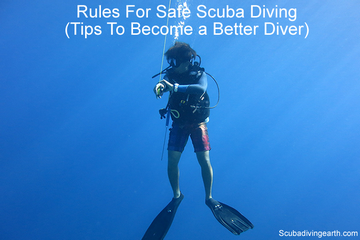
27 Rules For Safe Scuba Diving (Safety Tips To Become a Better Diver)

For those that don’t have the time to read this whole article on on scuba diving safety rules (although I urge you to do so), here are a few of my tops tips and rules. Get certified and aim to make it a safe sport. Never hold your breath when you’re diving. Practice safe ascents. Always do a 6 metre (20 feet) safety stop (Even if it’s not required). Plan your dive and dive the plan. Always leave 24 hours between your last dive and flying. Know your limitations. Always have an alternative air source and if in trouble don’t ask to use your buddy’s spare air source, just take it (but always agree this approach in in your buddy check). Use the ABC buddy check method. Never stray too far from your buddy and keep them within eyesight at all times.

Scroll to top