Warning: Attempt to read property "base" on null in /home/scubadivingearth/old.scubadivingearth.com/wp-content/plugins/pdb-image-expansion/pdbiex/Media_Library.php on line 49
Scuba Diving Earth | Page 45 of 50 | Scuba Diving Blog & Forum

Scuba Diving Earth

Scuba Diving Blog & Forum

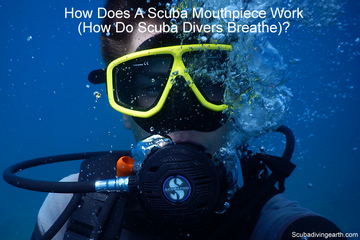
How Does A Scuba Mouthpiece Work (How Do Scuba Divers Breathe)?

A scuba mouth piece works by reducing the air pressure in your dive tank from around 200 bar (2,900 psi) down to ambient pressure. Ambient pressure is the pressure of the water that surrounds you on a dive. The 1st stage vs. 2nd stage of your regulator is where the magic happens. The first stage reduces the pressure to around 8-11 bar (116-160 psi) or intermediate pressure. The second stage is where the intermediate pressure is reduced down to ambient pressure, where it’s safe to breathe.
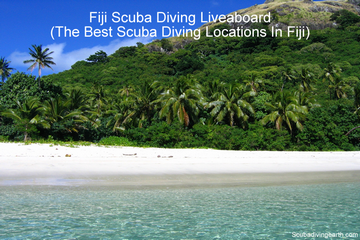
Fiji Scuba Diving Liveaboard (The Best Scuba Diving Locations In Fiji)

Scuba dive Fiji from a liveaboard to experience the ‘soft coral capital of the world.’ Fiji has some of the best diving in the world with pristine corals and abundant sea life. Some of the best scuba diving locations in Fiji include the area known as the Bligh Waters. This is better explored by way of a liveaboard dive trip. This allows for the exploration and enjoyment of the more remote dive sites in the region where less scuba divers go.

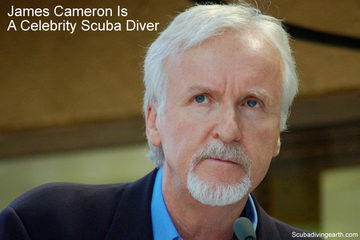
James Cameron Scuba Diving (Celebrity Scuba Divers)

James Cameron scuba diving celebrity and film director. Holding the accolade to have two of the four films that grossed over $2 billion. But he’s also been to the deepest part of planet earth, the Challenger Deep. Which gave Cameron the title for being the first person to successfully solo dive to the deepest part of the Mariana Trench.

Jessica Alba Scuba Diving (Celebrity Scuba Divers)

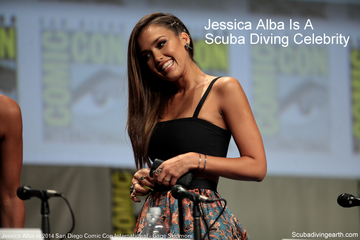
Jessica Alba began her scuba diving at the age of just 13 when she appeared in the remake of Flipper in 1995. It was 10 years later when she starred in underwater adventure movie Into the Blue that she used her scuba diving skills once more. Advanced PADI certified scuba diver Jessica Alba was taught to swim by her lifeguard mother at the age of three.

5 Scuba Diving Entry Techniques (Tips For Entering The Water Safely)

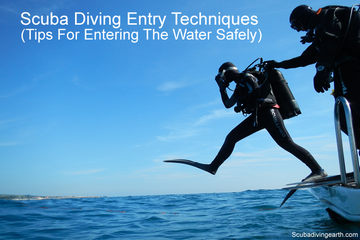
Five scuba diving entry techniques include the most common, which is the giant stride entry. But deep water entries also include the back roll entry and the forward roll entry methods. There’s also the seated entry method for entering shallow water or for entering the water quietly. The fifth way for entering the water scuba diving is the shore entry wade, which includes the backwards fin walk.

Diving Buddy Check Acronym or Mnemonic (Why Scuba Buddy Checking Is Important)

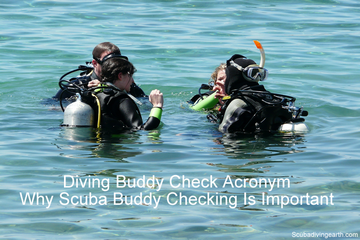
Many divers use a diving buddy check acronym or mnemonic to remember how to carry out a scuba dive buddy check. Acronyms or mnemonics include the ‘ABC’ BSAC buddy check and the ‘BWRAF’ PADI dive check. A scuba dive buddy check is for your safety and your buddy’s safety. The buddy checking makes sure your kit and your buddy’s kit is in working order. It helps to familiarise you both with each others scuba kit and confirms your air is switch on.

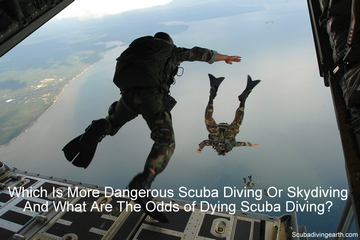
Is Scuba Diving More Dangerous Than Skydiving?

The question: ‘Is scuba diving more dangerous than skydiving;’ the answer is yes. The odds of dying scuba diving are nearly three times that of the odds of dying skydiving. But the odds of dying whilst driving in a car on the way to scuba dive or skydive are far worse. In fact you’re five times more likely to die in a car crash than you are scuba diving.

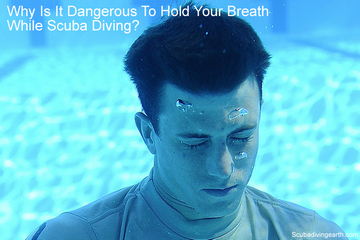
Why Is It Dangerous To Hold Your Breath While Scuba Diving?

It’s dangerous to hold your breath while scuba diving because if you do you risk a lung over expansion. A lung over expansion can lead to a pneumothorax (collapsed lung) or an arterial gas embolism (which can lead to a stroke). You’ll learn in your diver training the most important rule in scuba diving is to not hold your breath. You’ll learn about Boyle’s law, where the air in a diver’s lungs expands during ascent and contracts during descent. Breath holding underwater can result in one of the above two serious injuries and even death.

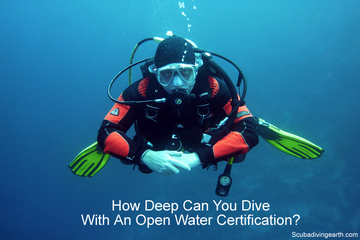
How Deep Can You Dive With An Open Water Certification?

The depth you can you dive with an open water certification with diving organisations like PADI and SSI is 18 metres (60 feet). But there are other diving organisations that also call their first certification level ‘open water diver.’ Some use the 18 metres depth level, whereas others use 20 metres (66 feet) as their safe depth for newly certified scuba divers. BSAC call their first certification level Ocean Diver, where the depth limit is set at 20 metres.

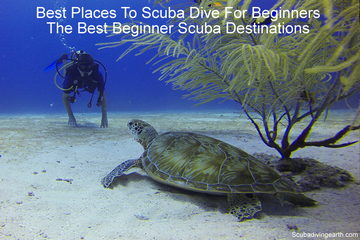
Best Places To Scuba Dive For Beginners (10 Best Beginner Scuba Destinations)

The best place to scuba dive for beginners include Bonaire, The Great Barrier Reef, the Red Sea, the Maldives, Barbados, Antigua, Cayman Islands, the Bahamas, the Florida Keys and Koh Tao. A dive site for a beginner scuba diver should satisfy the follow characteristics: The depth should be shallower than 20 metres (66 feet); There shouldn’t be an underwater current so it’s not a drift dive; The dive should ideally not be a wall dive where good buoyancy control is a key requirement; The dive must have a key interest, be it a shallow wreck, an interesting reef etc.

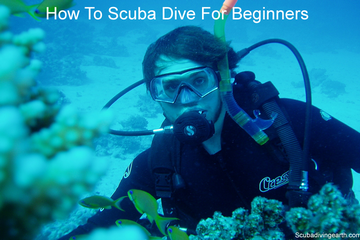
How To Scuba Dive For Beginners (7 Skills To Master As A Beginner Diver)

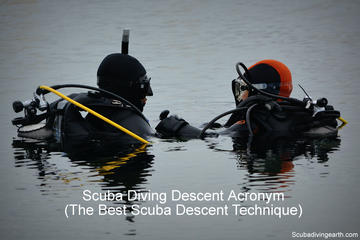
How to scuba dive for beginners is all about learning to scuba dive safely. Included in this article are 7 top skills to learn as a beginner scuba diver. These are: Skill #1: Never hold your breath; Skill #2: Equalise your ears early and often; Skill #3: Learn buoyancy control and to become neutrally buoyant; Skill #4: Learn to clear your mask; Skill #5: Learn to clear your regulator; Skill # 6: Release air from your BCD on your ascent; Skill #7: Always perform a safety stop at 5-6 metres (16-20 feet).

Scroll to top