Warning: Attempt to read property "base" on null in /home/scubadivingearth/old.scubadivingearth.com/wp-content/plugins/pdb-image-expansion/pdbiex/Media_Library.php on line 49
Scuba Diving Earth | Page 49 of 50 | Scuba Diving Blog & Forum

Scuba Diving Earth

Scuba Diving Blog & Forum

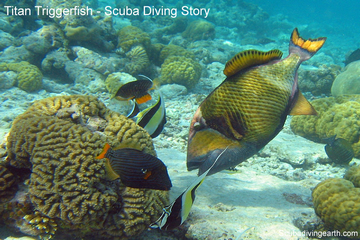
Titan Triggerfish Breeding Season (Scuba Diving Story In The Red Sea)

This is a short scuba diving story when my dive buddy and I were scuba diving along Triggerfish Alley in the Red Sea. This particularly aggressive Titan Triggerfish took an immediately dislike to my dive buddy. I turned to see her kicking her fins vigorously which was unlike her. Then I saw the reason, she had a Titan Triggerfish snapping at her heals like a Jack Russell Dog. I swam to her rescue like a ‘diver in shining armour’ and all ended well. We swam away from this Triggerfish and she didn’t get bitten.
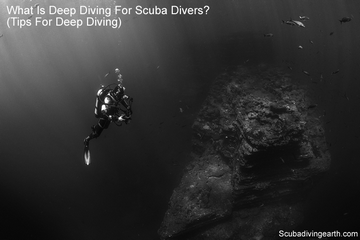
What Is Deep Diving For Scuba Divers? (26 Tips For Deep Scuba Diving)

Deep diving is underwater diving to depths beyond first stage diver training. For PADI and NAUI this means deeper than 18 metres (60 feet) and BSAC deeper than 20 metres (66 feet). But in practice deep diving is beyond 30 metres (98 feet) when divers can experience nitrogen narcosis.

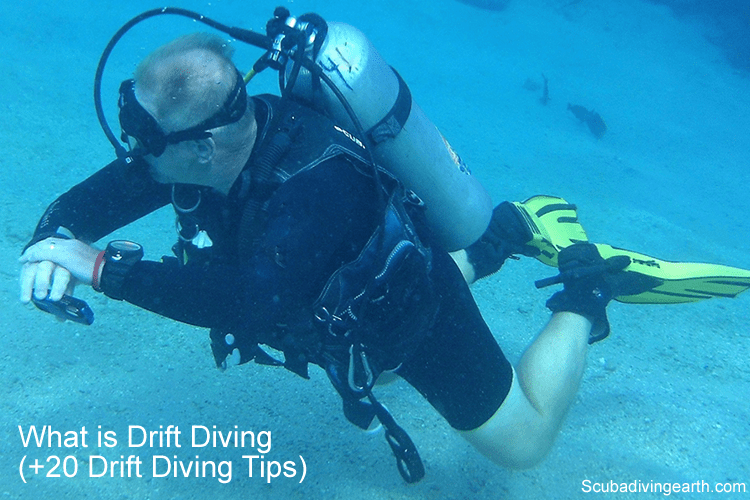
What is Drift Diving? (20 Pro Tips For Drift Diving Beginners)

A drift dive is a scuba dive in waters where there’s a tide or current flowing. This current will be strong enough to push you along in the water. The fun lies in going with the flow! If you’re diving in a current of half a knot or more, then I’d class this as a drift dive. But a dive where there’s a ‘drift’ may not always be about the drift itself. You may be scuba diving to see sharks that happen to be there because of the strong current. In which case you may not want to be drifting in the current.

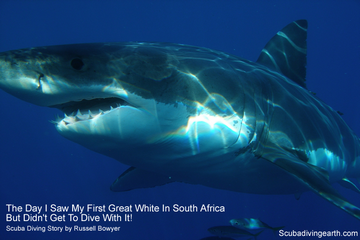
My Great White Shark Story In South Africa (But Didn’t Get To Dive With It)

This is the first of many scuba diving stories, and this one is a diving story of my own. It’s about the time I flew to South Africa to dive with Great White Sharks. Unfortunately for me it wasn’t to be, and whilst I got to see a very large female Great White Shark (and very close-up for that matter), I didn’t get to see her underwater from inside the shark-cage. Maybe next time? If you have a scuba diving short story, please complete the contact form to the right of this page.

What Are The Different Types Of Scuba Diving? (What’s Best For You?)

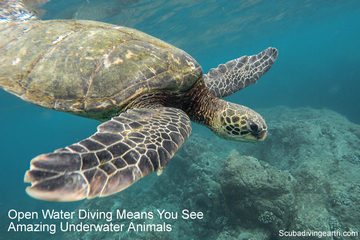
The types of scuba diving and what diving you can do depends on your scuba diver qualification level and experience. The types of scuba diving available to you begin with open water diving. Then you can extend this to exciting drift diving and go with the flow of the current. Enter the dark waters of the deep on a night dive and experience a whole new set of flora and fauna that wakes up in the night. Then gain more experience and qualify further to dive even deeper to explore fascinating wrecks and sea life including the infamous sharks that patrol the depths.

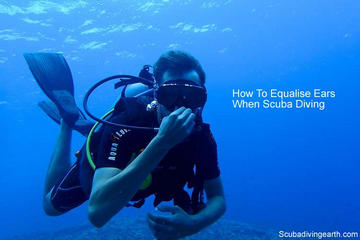
How To Equalize Ears When Scuba Diving Like A Pro (+20 Tips To Help)

The best way to equalise your ears when scuba diving is to swallow hard, which should open your eustachian tubes and equalise the air space. But if you can’t equalise your ears naturally pinch your nostrils on the outside of your mask and gently exhale, which is called the Valsalva Manoeuvre.

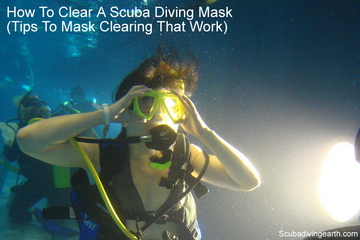
How to Clear a Scuba Diving Mask Like a Pro (4 Steps to Clear a Mask)

The four simple steps of how to clear a scuba diving mask underwater are as follows: 1. Take a breathe in from your regulator; 2. Tilt your head backwards; 3. Press your index finger on the top of the mask (Note: it’s important to master this skill using just one hand); 4. Blow out through your nose and into the mask to force the water out from the bottom of the mask’s skirt.

Scuba Diving Equipment Essentials (What Do You Need To Start Diving?)

The essential scuba diving equipment you need to start diving includes the following: diver’s watch; mask, snorkel and fins; and exposure suit or body insulation like a wetsuit or dry suit; a set of scuba diving regulators; a buoyancy control device or BCD; a dive computer (but this can be a combined diver’s watch-come dive computer). For diving  in your own country near to wear you live, you need to also add a weight system and air tanks or diving cylinders too. There’s then other scuba gear to add to your kit as you progress or if you have the money at the outset.

How Does Scuba Diving Burn Calories (Is Scuba Diving A Good Work Out?)

Scuba diving burns calories mainly due to heat loss as water dissipates heat from your body 25 times faster than air due to its greater thermal conductivity. Scuba diving also burns calories from low impact exercise in a weightless environment. The combination of both is up to 600 calories per hour.

How To Prevent Mask Squeeze (Advice To Avoid An Eye Barotrauma)

Mask squeeze is easy to prevent by the simple action of breathing out from your nose. This action equalizes the airspace in the mask as the pressures builds up on descent. The time when mask squeeze is most likely to happen is during the first 10 metres (33 feet) of descent. It’s a simple matter of remembering to blow out of your nose in between each nose squeeze to clear your ears on the way down.

107 Pro Tips For Beginner Scuba Divers (Must Know Techniques)

If there’s one lasting point to take away from this post about scuba diving tips for beginners, that’s to have fun and enjoy scuba diving, but to do it safely and within your own limitations. The scuba diving tips included are not only for beginners, as you can always learn more. The tips included also relate to scuba diving equipment tips; tips for diving from dive boats; buoyancy control tips; diver descent tips; underwater navigation tips; scuba travel tips; diving with wildlife tips; air conservation tips; dive time extension tips; safe scuba diving tips; dive buddy tips; plus health and fitness tips for scuba divers.

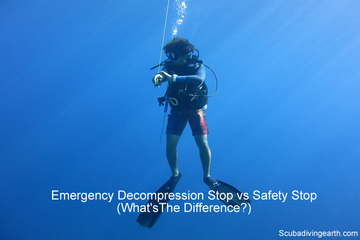
Emergency Decompression Stop vs Safety Stop (What’s The Difference?)

If you follow safe diving practices (which I recommend you do) you will perform a safety stop on every scuba dive you do. Additionally, you will dive within recreational dive depth limits according to your scuba diver certification level and diver experience. This means that you’ll only dive within safe no stop time limits, but where these are exceeded by accident, you’ll carry out emergency decompression stops, in addition to a safety stop at 5-6 metres (16-20 feet) for a minimum of 3 minutes.

Scroll to top