Warning: Attempt to read property "base" on null in /home/scubadivingearth/old.scubadivingearth.com/wp-content/plugins/pdb-image-expansion/pdbiex/Media_Library.php on line 49
Scuba Diving Earth | Page 50 of 50 | Scuba Diving Blog & Forum

Scuba Diving Earth

Scuba Diving Blog & Forum

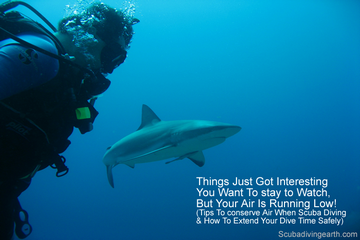
22 Top Pro Tips To Conserve Air While Scuba Diving (+5 Dive Extend Tips)

Learning how to conserve air while scuba diving is one of the most important techniques to master. Mastering this will make your air last longer and will extend your dive time. The list of air saving tips I’ve created also includes tips to extend your dive time too.

Scuba diving tips for non swimmers (Do not dive before you read this)

If you’re looking for scuba diving tips as a non swimmer is; learn to swim first. Don’t even consider scuba diving before you learn how to swim. It’s unsafe to do that. You have to be able to swim 200 metres (656 feet) in a swimming pool to learn to dive. Swimming isn’t difficult to learn and is fun once you know how. You may also wish to consider snorkeling as a first step to learning to scuba dive too.

Are Full Face Snorkel Masks Safe? (Read This Before You Buy One)

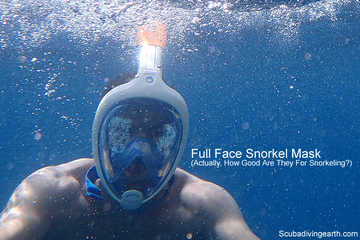
Full face snorkel masks are dangerous because of the “dead Space” and the potential for the build-up of CO2 inside the mask. Deaths of snorkelers have been linked to full face snorkel masks, which is more likely to happen if you buy a cheap, poorly made mask or if these masks are used under duress.

Is It Dangerous To Scuba Dive With Sharks? (Will I Be Eaten?)

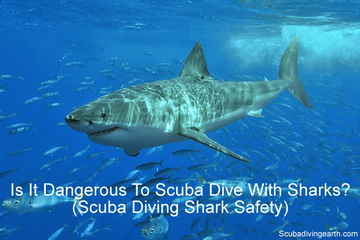
If you’re looking for a quick answer to: “Is it dangerous to scuba dive with sharks;” The answer is no. If you want the answer to: “Do divers get attacked by sharks?” The answer is yes. But if you ask a different question: “What are the odds of a shark attack?” The odds (According to the Wild Life Museum) of getting attacked AND killed by a shark are 1 in 3,748,067. But in a lifetime, you are more likely to die from fireworks (1 in 340,733), lightning (1 in 79,746), drowning (1 in 1,134), a car accident (1 in 84), heart disease (1 in 5). So you’re more likely to die of a heart attack whilst waiting to be attacked by a shark scuba diving. There are on average 70-100 shark attacks worldwide each year (That’s all shark attacks by the way, as scuba diver shark attacks are extremely rare), where between 5 and 15 result in death. So be careful if you’re driving to your shark dive, because you are more likely to be killed on the way there!

Lionfish Problem In Caribbean (Should Scuba Divers Kill Them?)

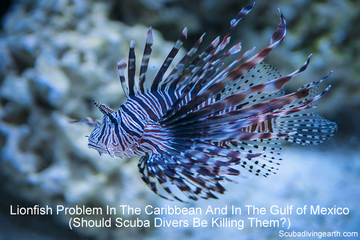
Whether you like it or not as a scuba diver, as a snorkeler or as a conservationist, lionfish in the Caribbean are being slaughtered by scuba divers with spears. Invasive lionfish are out-breeding, out-competing and living longer than the native fish stocks and other marine species in the region. The native species that the invasive lionfish are decimating, are important for ecological, commercial and recreational reasons. So this article considers whether it’s right to kill these creatures on spears as scuba divers. For me it goes against the grain for the usual conservationist nature of scuba divers, as lovers of all marine creatures. But I will admit to joining a group of scuba divers that went on a culling exercise of lionfish.

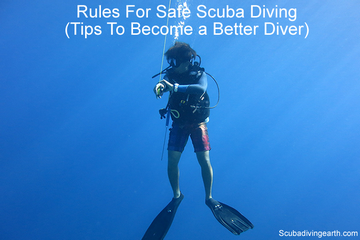
27 Rules For Safe Scuba Diving (Safety Tips To Become a Better Diver)

For those that don’t have the time to read this whole article on on scuba diving safety rules (although I urge you to do so), here are a few of my tops tips and rules. Get certified and aim to make it a safe sport. Never hold your breath when you’re diving. Practice safe ascents. Always do a 6 metre (20 feet) safety stop (Even if it’s not required). Plan your dive and dive the plan. Always leave 24 hours between your last dive and flying. Know your limitations. Always have an alternative air source and if in trouble don’t ask to use your buddy’s spare air source, just take it (but always agree this approach in in your buddy check). Use the ABC buddy check method. Never stray too far from your buddy and keep them within eyesight at all times.

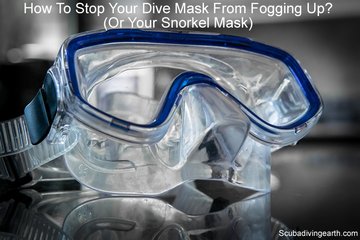
How To stop Your Dive Mask From Fogging Up (8 Pro-Diver Methods)

The best tip to stop your mask fogging up is to use baby shampoo. Baby shampoo is easy to apply. Shampoo for babies are gently, so they are easy on the eyes. So that any residue after you rinse your mask is less likely to irritate your eyes as a result. You can find baby shampoos that are hypoallergenic, most tend to be biodegradable, and they are readily available and cheap to buy. Most importantly, baby shampoo works well to clear dive mask fog.

Scroll to top